Introduction
Every growing application eventually hits the same wall: current infrastructure can't keep up with demand, and someone has to decide how to add capacity. There are exactly two ways to do that. Vertical scaling "scaling up" makes a single server more powerful by adding CPU, RAM, or storage to the existing machine. Horizontal scaling "scaling out" adds more servers and spreads the load across them. Both solve the same underlying problem, but they solve it in fundamentally different ways, with different cost curves, different failure modes, and different ceilings on how far they can actually take you. Choosing the wrong one doesn't just waste money it can mean performance bottlenecks, inflated cloud bills, or an architecture too rigid to handle real growth. This guide breaks down exactly how each approach works, what they actually cost in 2026, and a practical framework for choosing between them.
What Is Vertical Scaling?
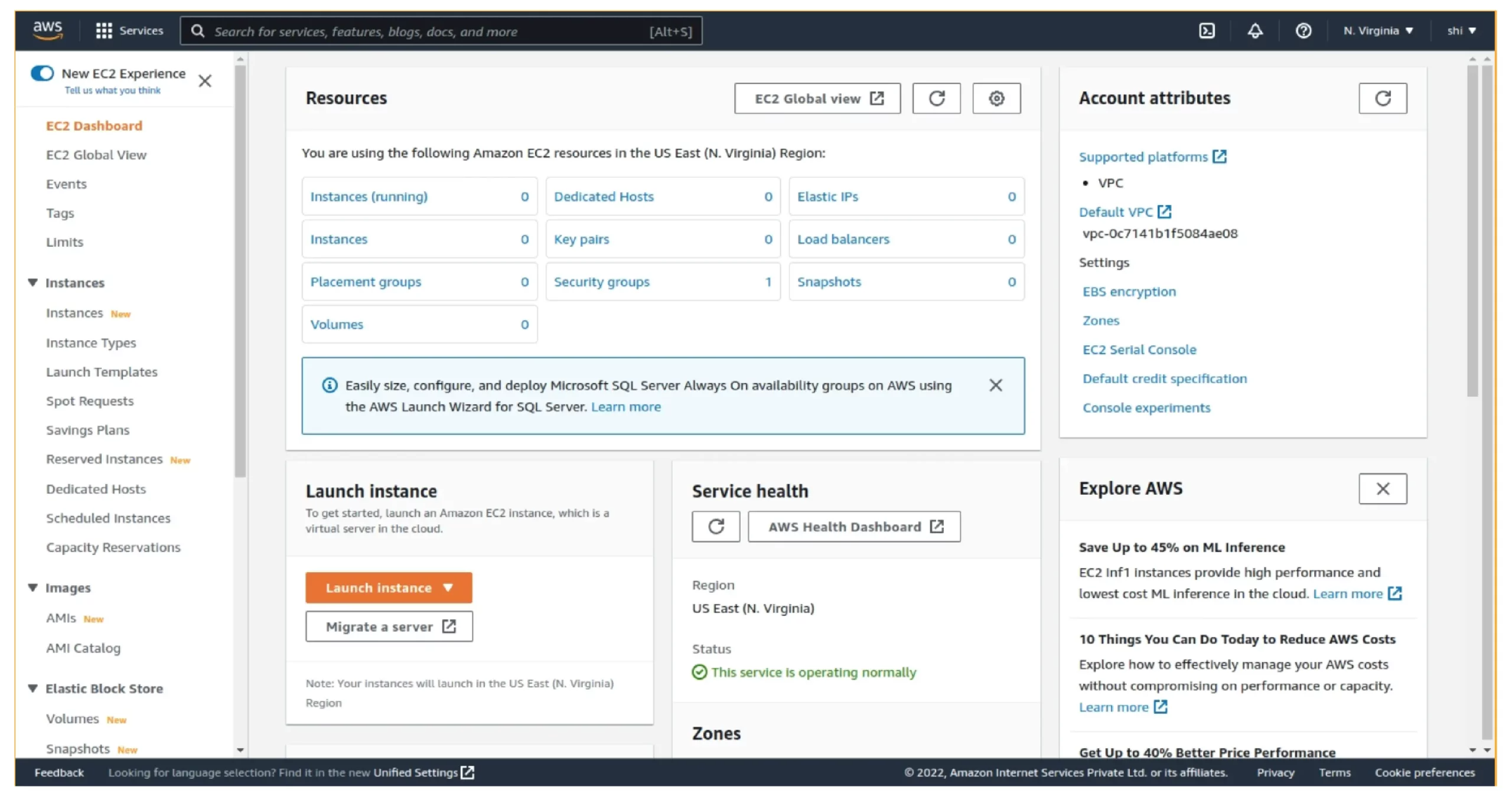
Vertical scaling, also known as scaling up, means increasing the resources of a single machine such as adding more CPU cores, RAM, or faster storage without changing the application's architecture. It is one of the simplest ways to increase capacity because the application continues running on the same machine and codebase; you're simply giving that machine more resources.
Advantages:
Simple to implement: No major architectural changes are required.
Less complexity: Avoids distributed-systems challenges such as load balancing, data synchronization, and consistency across multiple nodes.
Ideal for certain workloads: Particularly well-suited to applications that are difficult to distribute, such as some large relational databases.
Limitations:
Hard ceiling: Even the most powerful cloud instances have finite CPU, memory, and storage limits. Beyond a certain point, a single machine cannot provide the capacity of a properly distributed cluster.
Single point of failure: If the machine fails, the entire service can become unavailable unless additional redundancy is implemented.
Potential downtime during resizing: Scaling up may require restarting or migrating the workload, which can result in temporary service interruptions.
Costs increase rapidly at higher tiers: Larger instances can become significantly more expensive, especially at scale. Software licensing can further increase costs when pricing is based on CPU cores, making high-end vertical scaling particularly expensive.
What Is Horizontal Scaling?
Horizontal scaling, also known as scaling out, means adding more machines or instances to share the workload rather than increasing the capacity of a single machine. Instead of relying on one powerful server, multiple smaller, often commodity-grade servers work together, with incoming traffic distributed across them through a load balancer.
Advantages:
Near-limitless growth: Additional instances can be added as demand increases, providing significantly more capacity than any single machine can offer.
Built-in redundancy: If one instance fails, other instances can continue serving traffic, reducing the risk of a single point of failure.
Cost efficiency at scale: In large cloud environments, horizontal scaling is often more cost-effective because it relies on fleets of smaller, commodity-grade servers rather than increasingly expensive high-end machines.
Limitations:
Architectural complexity: Applications must be designed to operate across multiple instances without relying on a single node. This often requires externalizing or partitioning state and works best with stateless or partitioned workloads.
More moving parts: Load balancers, service discovery, inter-node networking, distributed storage, and centralized monitoring introduce additional operational complexity.
Higher engineering requirements: Designing, deploying, and maintaining a distributed environment requires specialized engineering expertise, which can increase both development effort and operational costs.
Side-by-Side Comparison
| Factor | Vertical Scaling | Horizontal Scaling |
|---|
| How It Works | Adds resources to an existing server | Adds more servers and distributes the workload |
| Implementation Complexity | Low - requires little or no architectural change | Higher - requires load balancing, state management, and distributed architecture |
| Growth Ceiling | Hard limit - constrained by the largest available instance | Highly scalable - additional nodes can be added as needed |
| Fault Tolerance | Lower - typically creates a single point of failure | Higher - redundancy across multiple nodes improves resilience |
| Downtime During Scaling | May require a restart or migration | Typically minimal - new nodes can be added while existing ones continue serving traffic |
| Cost at Small Scale | Often more cost-effective for modest capacity increases | Higher relative overhead for smaller workloads |
| Cost at Large Scale | Costs can escalate rapidly at higher-performance tiers | Often more cost-effective for large, distributed workloads |
| Talent & Operational Overhead | Lower - simpler infrastructure to manage | Higher - requires distributed-systems and cloud expertise |
| Best Fit | Monolithic applications, large databases, and quick capacity upgrades | Modern SaaS applications, stateless services, and unpredictable or rapidly growing workloads |
The Cost Reality Most Teams Miss
The most expensive scaling mistake isn't necessarily choosing the wrong direction between horizontal and vertical scaling. It's failing to track what a scaling decision actually costs once it is running in production.
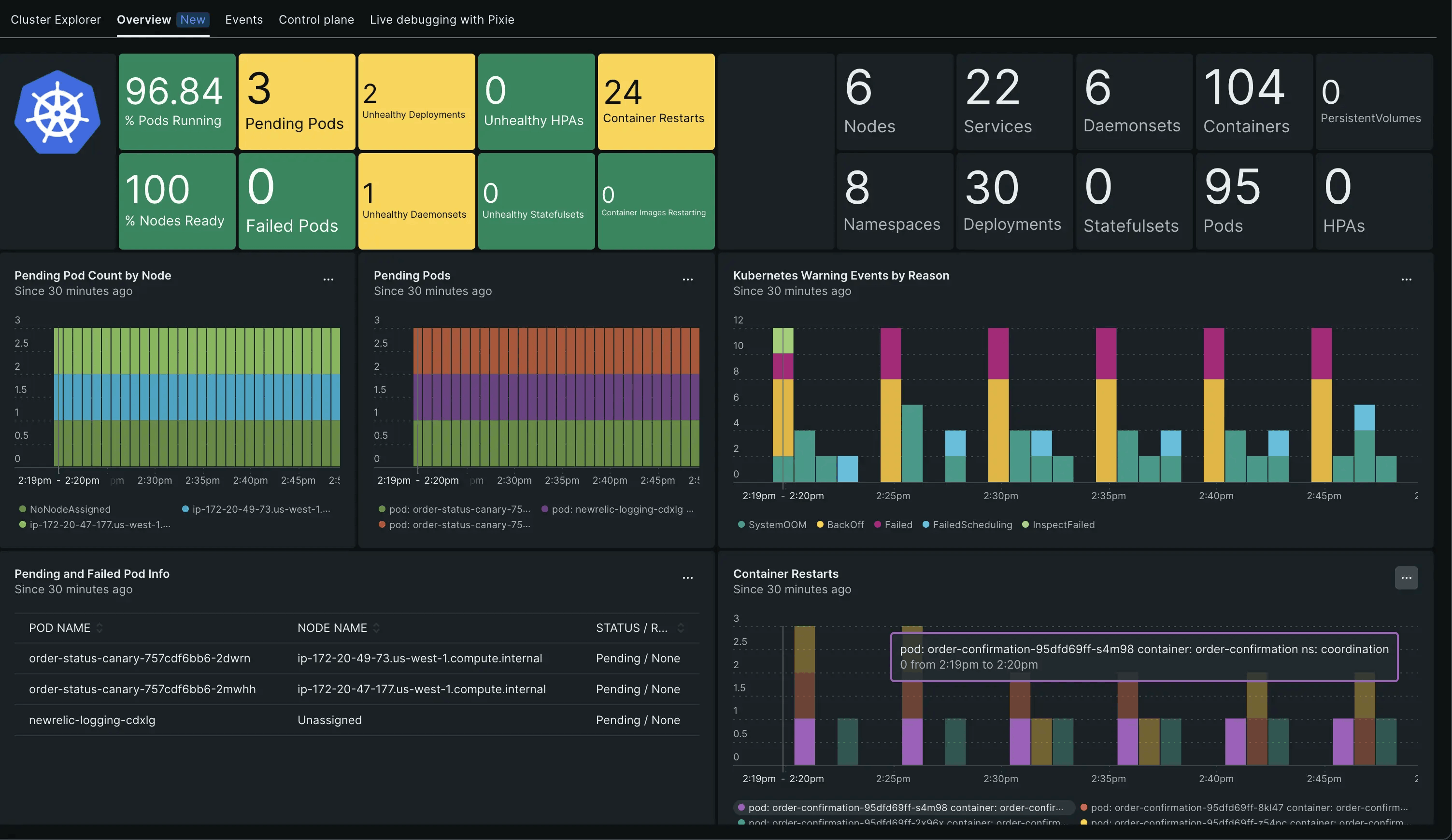
A Kubernetes cluster running 40 pods for a service that genuinely needs only 12 isn't a scaling success. It's an ongoing infrastructure cost that may remain invisible until the monthly cloud bill arrives. This can happen in several ways: a cluster automatically scales up during a traffic spike but never scales back down, instances are resized for a one-time load test and left running for months, or read replicas are added during an incident and forgotten once the workload stabilizes.
Global IT spending is projected to reach $6.31 trillion in 2026, representing a 13.5% increase from 2025. As cloud infrastructure becomes an increasingly significant part of IT budgets, this makes cost visibility more important than ever. It is also why FinOps - bringing financial accountability to variable cloud spending has become increasingly important alongside DevOps. Automated cost controls that flag anomalous spending in real time, such as an auto-scaling group jumping from 4 instances to 40 overnight, can help prevent scaling decisions from becoming long-term sources of unnecessary expenditure.
Most Modern Applications Actually Use Both
The horizontal-versus-vertical framing can make scaling appear like a binary choice, but most real-world systems use a hybrid approach.
A common pattern is to scale a service vertically first because it is simpler and requires little architectural change. As the workload grows or becomes more unpredictable, teams can gradually introduce horizontal scaling where its additional complexity is justified.
Many modern SaaS applications are designed with horizontal scaling in mind from the beginning, even if their early deployments run on only one or two instances. This is because retrofitting an application for horizontal scaling later can require significantly more architectural work than designing for scalability from the outset.
The goal isn't to maximize the number of servers. It's to introduce the right level of scalability for the workload without creating unnecessary infrastructure complexity or cost.
A Practical Framework for Choosing
Ask these questions in order:
Is the workload stateless, or can its state be externalized?
If application state can be moved to a shared database, cache, or external storage layer, horizontal scaling becomes much more practical. If the workload depends heavily on a single stateful system, such as a large relational database that is difficult to partition vertical scaling may be the more practical starting point.
Is the traffic predictable or unpredictable?
Predictable and relatively steady workloads can often be handled effectively through vertical scaling. Spiky or unpredictable workloads benefit more from horizontal scaling because additional instances can be added and removed as demand changes.
Does the team have the expertise to operate a distributed system?
Horizontal scaling introduces additional infrastructure and operational complexity. If the team isn't ready to manage that complexity, starting with vertical scaling and gradually building toward horizontal scalability can be a sensible approach.
Is downtime during a scaling event acceptable?
If the service cannot tolerate interruptions, horizontal scaling becomes more attractive because new nodes can generally be introduced while existing instances continue serving traffic.
Conclusion
Horizontal and vertical scaling solve the same fundamental problem, running out of capacity but they approach it in very different ways.
Vertical scaling is simpler and can be more cost-effective at smaller scales, but it eventually reaches a hard limit and can create a single point of failure. Horizontal scaling provides greater elasticity, redundancy, and long-term growth potential, but requires additional architectural investment and specialized operational expertise.
In practice, mature systems often use both approaches: vertical scaling where additional resources are sufficient and simple, and horizontal scaling where growth, availability, and unpredictable demand justify the added complexity.
Ultimately, the best scaling strategy isn't simply about choosing between “bigger” or “more.” It's about understanding the workload, reliability requirements, operational capabilities, and just as importantly the actual cost of every scaling decision once it reaches production.